

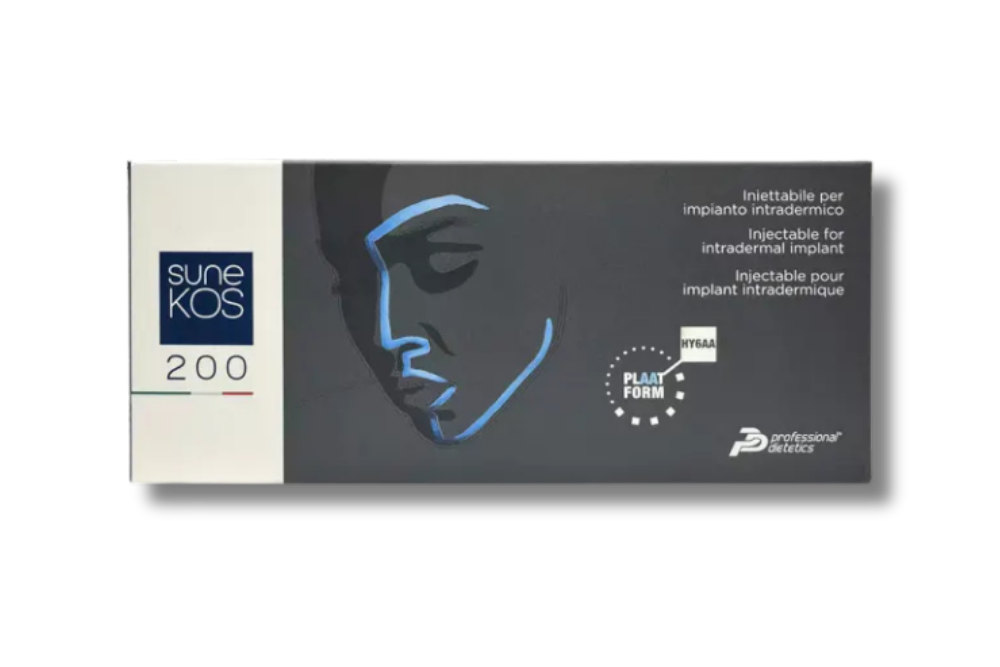
Sunekos 200 is a professional injectable skin booster used in aesthetic medicine to support skin quality improvement and dermal biostimulation. The formulation combines hyaluronic acid with a patented amino acid complex designed for microinjection protocols. The product is commonly used in treatments addressing early signs of skin ageing, including fine lines, dehydration and mild loss of elasticity. It is frequently selected for delicate treatment areas such as the periocular region, as well as the face, neck, décolleté and hands. Sunekos 200 is positioned within aesthetic practice as a regenerative skin booster rather than a volumising dermal filler. How It Works Sunekos 200 combines low molecular weight hyaluronic acid with a blend of amino acids that act as structural components within the extracellular matrix. Following intradermal injection, the hyaluronic acid component supports hydration within the treated tissue, while the amino acid complex provides precursors involved in fibroblast activity related to collagen and elastin synthesis. This approach supports structural skin quality improvement through dermal biostimulation rather than volumisation. Key Benefits • Supports improvement in skin texture and elasticity • Provides hydration within the dermal matrix • Suitable for delicate areas including the periocular region • Used for early signs of skin ageing and fine lines • Can be incorporated into regenerative aesthetic treatment protocols Ingredients and Formula Key components include: • Low molecular weight hyaluronic acid (200 kDa) – supports tissue hydration • Glycine – amino acid involved in collagen structure • Proline – structural amino acid used in collagen formation • Lysine – contributes to connective tissue structure • Valine – amino acid involved in cellular protein synthesis • Leucine – amino acid involved in structural protein formation • Alanine or hydroxyproline variants depending on formulation Treatment Protocol Sunekos 200 is typically administered using superficial or mid-dermal microinjection techniques. Protocols commonly involve a course of multiple sessions spaced approximately 7-10 days apart. The number of sessions and maintenance treatments may vary depending on practitioner assessment and patient needs. Practitioners should follow manufacturer guidance and professional clinical judgement when incorporating the product into treatment plans.